


IMPLANTOLOGY
Even with careful oral hygiene and regular dental check-ups, it is not always possible to prevent the loss of a natural tooth, whether due to injury, disease or genetic predisposition.
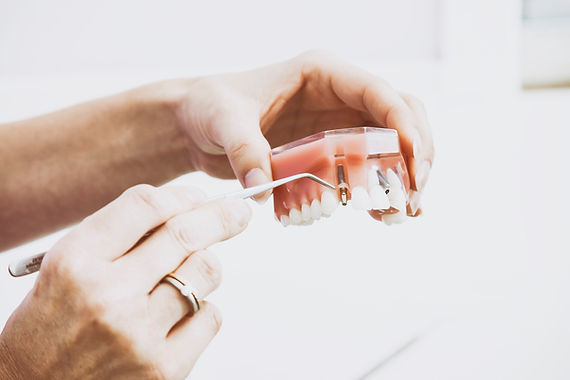
Today, the resulting gap can be replaced quickly and elegantly with a dental implant. An implant takes over the function of a natural tooth root and serves as a stable foundation for crowns, bridges or the fixation of dentures.
It is made of biocompatible titanium and has the shape of a small screw. It is inserted gently and painlessly into the bone under local anaesthesia, or, if required, under analgosedation or general anaesthesia.
Thanks to implants, it is possible to restore not only the function of the teeth after tooth loss, but also natural aesthetics and quality of life when eating, speaking and smiling.
Benefits of Dental Implants
-
A secure and firm biting sensation with implant-supported dentures
-
No need to grind down healthy neighbouring teeth, as is required with a conventional bridge
-
Protection of natural bone
-
Chewing pressure is transferred directly into the jawbone, just like with natural teeth
-
Complete tooth replacement without removable dentures
-
Long durability
Osseointegration – The Biological Foundation of a Successful Dental Implant
The long-term success of a dental implant depends on a unique biological process known as osseointegration. During this process, the titanium implant gradually forms a direct and permanent bond with the surrounding jawbone, without the formation of soft connective tissue. This creates a stable biological connection that enables the implant to function like a natural tooth root, efficiently transmitting chewing forces to the surrounding bone.
Immediately after implant placement, the body's natural healing process begins. During the first few days, a blood clot forms around the implant site. This clot contains important growth factors that initiate bone regeneration and support the healing process. Subsequently, specialized bone-forming cells, known as osteoblasts, become active and begin producing new bone directly on the specially treated implant surface. Over time, this newly formed bone matures, remodels, and creates a strong biological bond between the implant and the jawbone.
In most cases, osseointegration takes approximately eight weeks. During this healing period, the implant gradually gains stability and prepares for long-term functional loading. However, the exact healing time varies from patient to patient and depends on several factors, including bone quality and quantity, general health, smoking habits, metabolic diseases, and the extent of the surgical procedure.
Once osseointegration has been successfully completed, the implant is restored with a custom-made ceramic crown, bridge, or a fixed full-arch prosthesis. The result is a highly aesthetic, functional, and long-lasting restoration that allows patients to eat, speak, and smile with confidence once again.
Why Does Healing Take Approximately Two Months?
Although a dental implant often feels stable immediately after placement, its long-term strength is achieved only through the biological process of osseointegration. During the following approximately eight weeks, newly formed bone grows directly onto the implant surface and gradually creates a firm, stable connection between the implant and the jawbone.
Allowing sufficient time for this healing process is essential for the long-term success of implant therapy. Careful oral hygiene, regular follow-up examinations, and adherence to your dentist's recommendations provide the best conditions for predictable healing and long-lasting implant stability.
Immediate Loading Implants
Dental implants no longer have to mean months of waiting. Thanks to modern surgical techniques, a dental prosthesis can be fixed in a way that allows it to be loaded practically immediately after the procedure.
Stable connection with the bone is achieved by placing the implants precisely into firm bone structures. The front implants are inserted straight, while the posterior implants are placed at an angle. This approach also helps protect the maxillary sinus and nerves.
The benefits of this method include:
-
Immediate load-bearing capacity and stability of the new dental prosthesis
-
Maximum time efficiency of the treatment
-
Minimal discomfort and fast recovery
-
A solution often completed within a single procedure
-
Active protection and preservation of bone tissue
-
A smart investment with long-term value
During the initial examination, we can determine whether this type of prosthetic solution is suitable for you.
Durability of Implants
Modern dental implants are a long-term solution. With proper care, they can last a lifetime. However, just like natural teeth, they require precise hygiene and regular professional care.
Bacterial plaque can also form around implants. If left untreated, it may lead to inflammation and gradual loss of stability. This process often develops silently and without pain.
To maintain maximum function and aesthetics, we recommend regular check-ups and professional dental hygiene at least twice a year.

Professional Notice
The information presented on this page is based on current scientific evidence, the recommendations of the International Team for Implantology (ITI), and internationally recognized publications in the fields of implant dentistry, bone regeneration, and periodontology. Our treatment concepts are guided by the principles of evidence-based dentistry.
